Adjusting to the U.S. education system as an international student is one of the most demanding parts of studying abroad — academically, socially, and emotionally. According to the , more than 1.1 million international students were enrolled in U.S. institutions in the 2023–24 academic year. Most of them faced the same set of challenges: unfamiliar classroom expectations, cultural adjustment, and the logistics of staying in legal status. This guide covers each of those areas and gives you practical steps to make the transition faster.
Degree Level | Share of International Students (2023–24) |
|---|---|
Master's | 46.5% |
Bachelor's | ~5% of all BAs awarded |
Doctoral | ~13% of all PhDs awarded |
Associate/Other | Remaining share |
Source: Institute of International Education, Open Doors 2024
How the U.S. Classroom Actually Works
The U.S. system does not rely on a single final exam to determine your grade. Most courses use continuous assessment — a mix of assignments, quizzes, projects, class participation, and midterms, all contributing to your final grade. That structure rewards consistent effort across the semester, not just performance at the end.
Grades run on a letter scale from A to F, translated into a 4.0 GPA system. An A equals 4.0; a B equals 3.0; and so on. Graduate students generally need to maintain a 3.0 GPA to stay in good standing or keep scholarships. Some professors grade on a curve, adjusting scores based on the class average. Check your syllabus — it will tell you exactly how your grade is calculated.
Each course carries a set number of credit hours. You need to earn a minimum number each semester to maintain . Your academic advisor can help you plan your credit load without overcommitting in your first semester.
The syllabus is a binding document. Read it on the first day. It covers grading weight, attendance policy, assignment deadlines, and academic integrity rules. Missing a deadline in the U.S. typically means a grade penalty with no exceptions.
Academic Adjustment: What Catches Students Off Guard
Research confirms that international students face significant academic challenges, particularly around communication with professors and classmates. Here is what surprises most students:
Class participation is graded. According to Wesleyan University's , professors in the U.S. expect students to raise their hand, answer questions, and comment on course material. If you don't participate, a professor may assume you haven't done the reading — and your grade may reflect that. If you're uncomfortable speaking up, contact your professor early and ask if there's an alternative way to demonstrate engagement.
Critical thinking over memorization. U.S. professors want you to form your own arguments, challenge ideas, and back up claims with evidence. Reproducing information from textbooks is not enough. Essays require original analysis, proper citations, and a clear thesis. If you're unfamiliar with this format, visit your campus writing center before the first major assignment — not after.
Academic integrity is non-negotiable. Plagiarism carries severe penalties, including expulsion. In some countries, sharing or copying information is acceptable. In the U.S., it is not. Every assignment must be your own work unless explicitly stated otherwise. Understand your university's academic integrity policy during the first week.
Language goes beyond fluency. Even students with strong English skills often struggle with academic vocabulary, discipline-specific terminology, and fast-paced classroom discussions. This improves with time, but using campus ESL workshops and conversation partners in your first semester speeds the process up significantly.
Social and Cultural Adjustment
Academic adjustment is only part of the picture. Research published in Sage Journals found that sociocultural challenges were the most common difficulty across 21 years of studies on international students, with language barriers identified as the primary driver.
Culture shock follows a predictable pattern. According to the , it typically moves through four phases: an initial honeymoon phase where everything feels exciting, a disorientation phase where differences become frustrating, an adjustment phase where you start developing coping strategies, and an integration phase where you feel settled. Most students hit the frustration phase between weeks four and eight of their first semester.
Communication style. Americans generally prefer direct communication. Statements that feel blunt or abrupt to you are usually not intended as rude — clarity is simply valued over indirectness. Getting used to this style takes time but reduces misunderstandings significantly once you do.
Building a social network. Forming friendships with domestic students is harder than most international students expect. Clubs, sports teams, student organizations, and campus events are the most effective entry points — not because they're fun (though they often are), but because shared activity creates natural conversation and repeat contact. Both matter for forming real friendships.
Mental health matters. A national study tracking 44,560 international students from 2015 to 2024, published in , found that the prevalence of anxiety among international students rose from 20% to 36% over that period, and depression from 20% to 35%. Despite this, counseling service use increased only modestly. Many students avoid seeking help due to stigma in their home cultures or simply not knowing these services exist. Knowing they're available before you need them makes it easier to use them.
Support and Resources Available to You
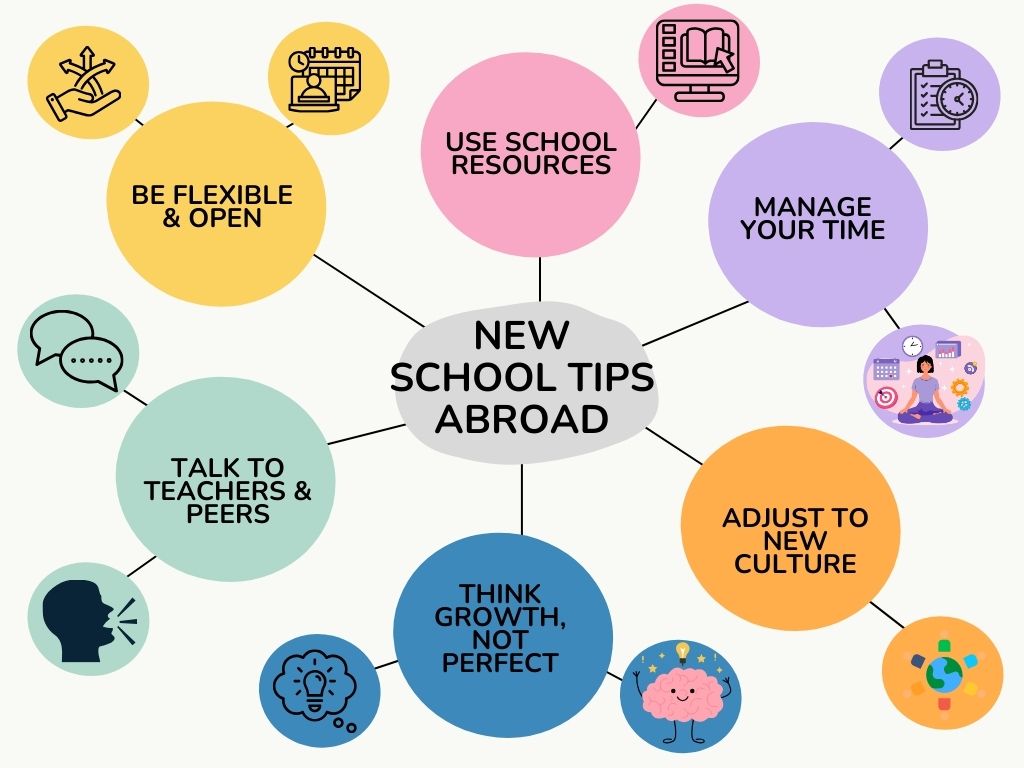
Most U.S. universities provide a range of services specifically for international students. Using them early — rather than waiting until you're struggling — makes a real difference.
International Student Office (ISO/ISSO). This is your first point of contact for visa compliance, course load requirements, and address reporting. The U.S. Department of Homeland Security tracks your enrollment status through , and your ISO manages that record. If your status changes — you drop below full-time, change your program, or take a leave — you must notify your ISO immediately.
Academic advisors. They help you plan your credit load, understand major requirements, and interpret for applications. Build a relationship with your advisor early. They can also connect you with tutoring, disability accommodations, and scholarship opportunities.
Counseling and mental health services. Campus counseling centers are confidential and typically free. They often have multilingual staff and experience working with international students. If you are on a waitlist, ask about same-day crisis appointments or peer support programs as a bridge.
Writing centers and tutoring. Free, underused, and effective. A writing center appointment before submitting your first essay can prevent a poor grade and help you understand U.S. academic writing expectations from day one.
Peer and community networks. International student associations, cultural organizations, and religious groups provide community quickly. They also give you access to students who have already navigated the same transition and can tell you what actually works at your specific institution.
Practical Tips for a Faster Adjustment
These are the habits that make the biggest practical difference in your first year:
Attend every orientation session. They cover academic integrity, grading systems, campus resources, and visa requirements all at once. Missing them means finding out about these things the hard way later.
Go to office hours. U.S. professors hold regular office hours and expect students to use them. It builds rapport, clarifies expectations, and signals that you're serious about the course.
Track every deadline. Use a calendar app and log assignment due dates, exam dates, and administrative deadlines (like SEVIS reporting dates) from the first week of semester.
Balance your first-semester course load. Don't take the maximum number of credits while you're adjusting to a new system, a new city, and a new culture. It's not worth it.
Build a mixed social network. Connect with other international students for shared experience and community. Also engage with domestic students — it improves your English fluency and cultural familiarity faster than almost anything else.
Understand your work authorization before you need it. As an F-1 student, you can work up to 20 hours per week on campus during the academic year. After graduation, the U.S. Citizenship and Immigration Services authorizes up to , with a 24-month extension available for students who graduated with a STEM degree. Start the OPT application process with your ISO at least 90 days before your program ends — USCIS processing takes time.
Stay in contact with home. Regular contact with family reduces homesickness and provides emotional stability during a demanding transition. Schedule calls rather than waiting until you're already overwhelmed.
Adjusting to the U.S. education system as an international student takes time and deliberate effort. The challenges are real — academically, socially, and emotionally — but they are well-documented and manageable with the right approach. Use your campus resources early, engage with both the academic and social sides of university life, and stay on top of your visa compliance. The skills you develop navigating this transition — adaptability, independent thinking, cross-cultural communication — are genuinely valuable long after your degree is complete.
 Health Care in the U.S. for International Students: Insurance, Costs, and Where to Get Care
 How International Students Can Build Successful U.S. Companies on F-1 and OPT Visas
 Are Extension Schools Worth It? Pros, Cons, and Costs
 Do College Career Development Programs Help Students Get Jobs?
 How Universities Can Improve Student Engagement and Retention