
Landing a US job offer as an international student isn't just about being good at what you do. It's about proving you're worth the extra paperwork, the visa timeline, and the risk an employer takes on when they sponsor you. The students who pull this off aren't lucky. They're doing specific things differently, and you can copy them.

If you're sitting on a solid resume with zero responses after sending out hundreds of applications, it's rarely a skills problem. It's usually a positioning and timing problem. Let's fix that.
The Sponsorship Math You're Up Against
Since February 27, 2026, the H-1B lottery no longer treats every applicant equally. The Department of Homeland Security replaced the random draw with a . Your odds of selection now depend on the wage level tied to your job offer, not just luck.
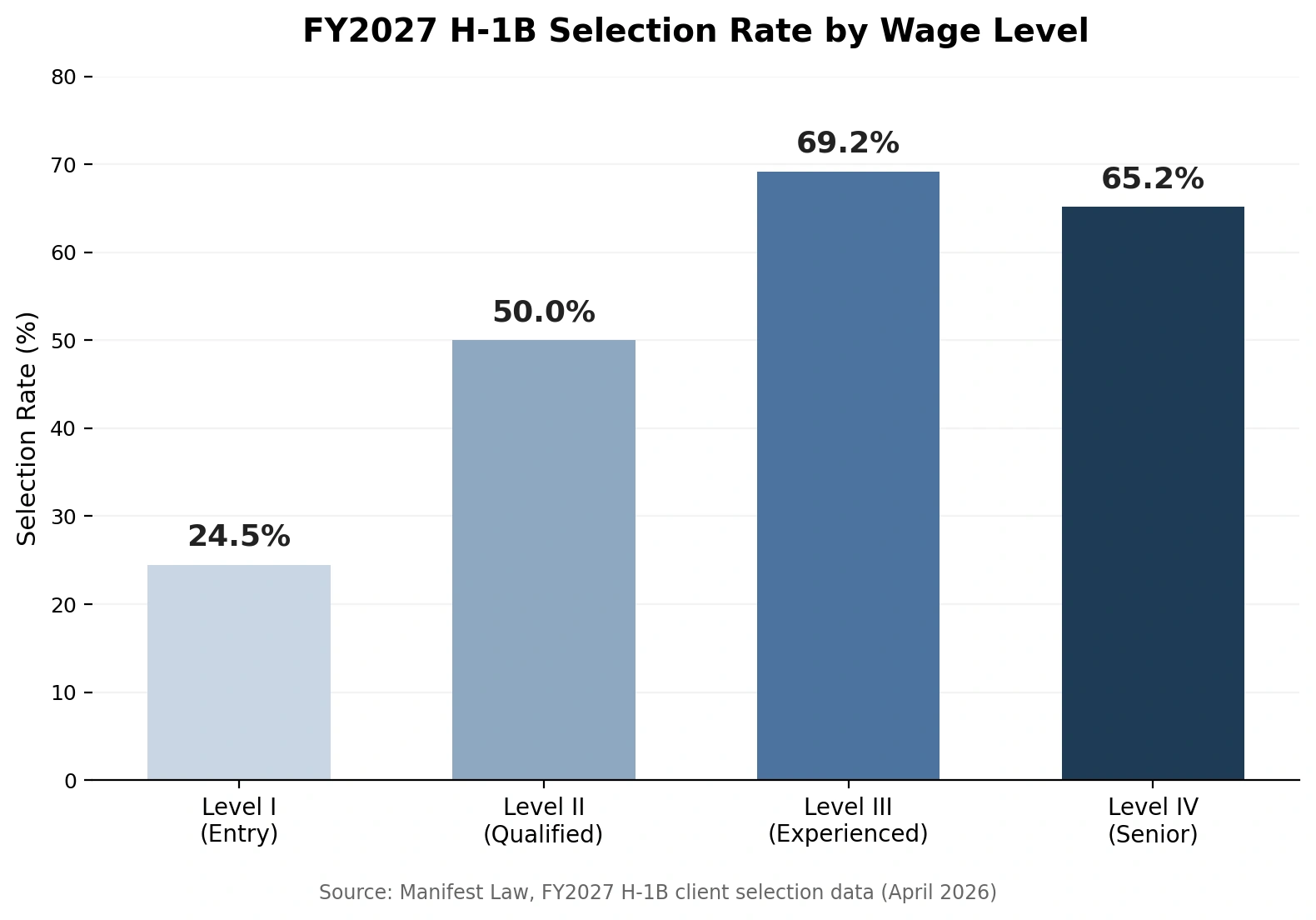
Here's how the first lottery under this system actually played out, based on :
Wage Level | What It Means | Actual FY2027 Selection Rate |
|---|---|---|
Level I | Entry level pay | About 25% |
Level II | Qualified, some experience | About 50% |
Level III | Experienced | About 69% |
Level IV | Fully competent, senior | About 65% |
These numbers ran higher than the government's own early estimates, mostly because fewer employers registered this year after a new $100,000 fee on overseas H-1B filings. If that fee goes away, more employers could pile back in and these odds could tighten up again next cycle. Either way, the pattern holds. Your offer's wage level, not just your salary number, decides your shot at getting picked. Chasing a slightly higher-level job title or a role with more responsibility can genuinely change your odds, not just your paycheck.
Your OPT Track Changes the Playbook
How you play this depends heavily on whether you're on standard OPT or STEM OPT, because your timeline gives you a completely different number of shots at the lottery.
Non-STEM OPT (1 year): You get exactly one lottery attempt. There's no room to build up to a higher wage level over time, so landing a Level II offer or better from the start becomes a make-or-break priority.
STEM OPT (3 years): You get up to three lottery cycles, under the . This gives you room to play it safer early on. You can take a Level I offer in year one, earn a promotion or raise, then re-enter the lottery at Level II or Level III in year two or three with much better odds.
If you're on the 1-year track, don't gamble on a low starting offer hoping to grow into it later. You won't get a second attempt at those odds. If you're on the 3-year STEM track, you have more flexibility to prioritize getting your foot in the door first and negotiating wage level later.
Pick Credentials That Actually Move Fast
A second master's degree sounds impressive. It's also expensive and slow. If your OPT clock is ticking, speed matters as much as prestige.
Short, focused credentials in areas like data analytics, cybersecurity, or actuarial exams often get you hired faster than a broad second degree. Employers care that you can do the job now, not that you spent two more years in a classroom.
Non-degree routes count too. Bootcamps and industry certifications are increasingly accepted, especially in tech and analytics roles, where employers are already screening more on skills than on where you studied. If your existing foreign credential doesn't translate clearly on its own, getting it formally evaluated can be worth the time. It gives a US employer or licensing board something they can actually read and compare against, instead of guessing what your transcript means.
Build Skills Employers Are Actually Screening For
Here's something most students don't know: GPA screening has dropped hard. In 2019, about 73% of employers screened candidates by GPA. Now it's down to 42%, according to recent employer hiring research. Skills-based hiring is up to 70% of employers, most heavily used during interviews and initial screening.
So what are they screening for? Recent surveys point to a short list:
Teamwork and collaboration
Problem-solving under real constraints
Clear communication, written and spoken
A track record of strong work ethic
Comfort adapting when priorities shift
None of this works if you just list these as adjectives on your resume. You need proof. If you worked a part-time job while carrying a full course load, that's a work ethic story. Say it that way, not as a line item buried in your resume.
Get Referred, Not Just Reviewed
Cold applications go into a pile. Referrals skip most of that pile entirely. This is the single biggest lever international students underuse, mostly because it feels awkward to ask.
Start building your network 6 to 9 months before you graduate, not the month before. Alumni from your program, professionals in your target field, people you met at a conference or through a professional group all count.
A good referral ask is short and specific. Name the role. Explain in one line why you're a fit. Make it easy for them to say yes with almost no effort on their part. Compare that to a vague "can you help me find a job" message, and you'll see why one works and the other gets ignored.
When you reach out to an alum at a company you want in, ask about one specific open role. That's a five-minute favor. Asking someone to "keep an eye out" for you generally isn't.
Here's a template you can copy and adjust:
"Hi [Name], I saw you're working in [team or department] at [Company]. I'm finishing my degree in [field] and just saw the [job title] posting on your team. Would you be open to a quick chat about the role, or could you point me to the right person?"
Swap in real details, keep it under three sentences, and send it before the role gets buried under a hundred other applications.
Make Yourself the Easy Yes
Positioning means picking one clear story about who you are professionally, instead of trying to be everything to everyone. "I build data pipelines that cut reporting time" beats "I'm a hardworking, detail-oriented team player" every time.
Put numbers on your resume wherever you can. Outcomes, not duties. Here's the difference in practice:
Before: "Responsible for managing social media accounts and creating content."
After: "Grew Instagram engagement 35% in one semester by testing content formats weekly."
The first line describes a job. The second line proves you can do it well. Go through your resume and rewrite every duty-based line into an outcome, even if the number is small.
On sponsorship, don't lead with it and don't hide it either. Mention your work authorization status and timeline clearly once it's relevant, usually once you're past the first conversation, so there are no surprises later in the process.
Win the Interview and the Offer
Expect questions about your visa status and timeline. Prepare a short, confident answer instead of an apologetic one. You're not asking for a favor. You're explaining a process the employer has handled before.
On timing, work backward from the H-1B registration window, which opens in early March. If you need sponsorship that cycle, you need an offer locked in well before then, so your employer has time to prepare the registration. Every deadline in this process is fixed. Miss one and you're waiting another year.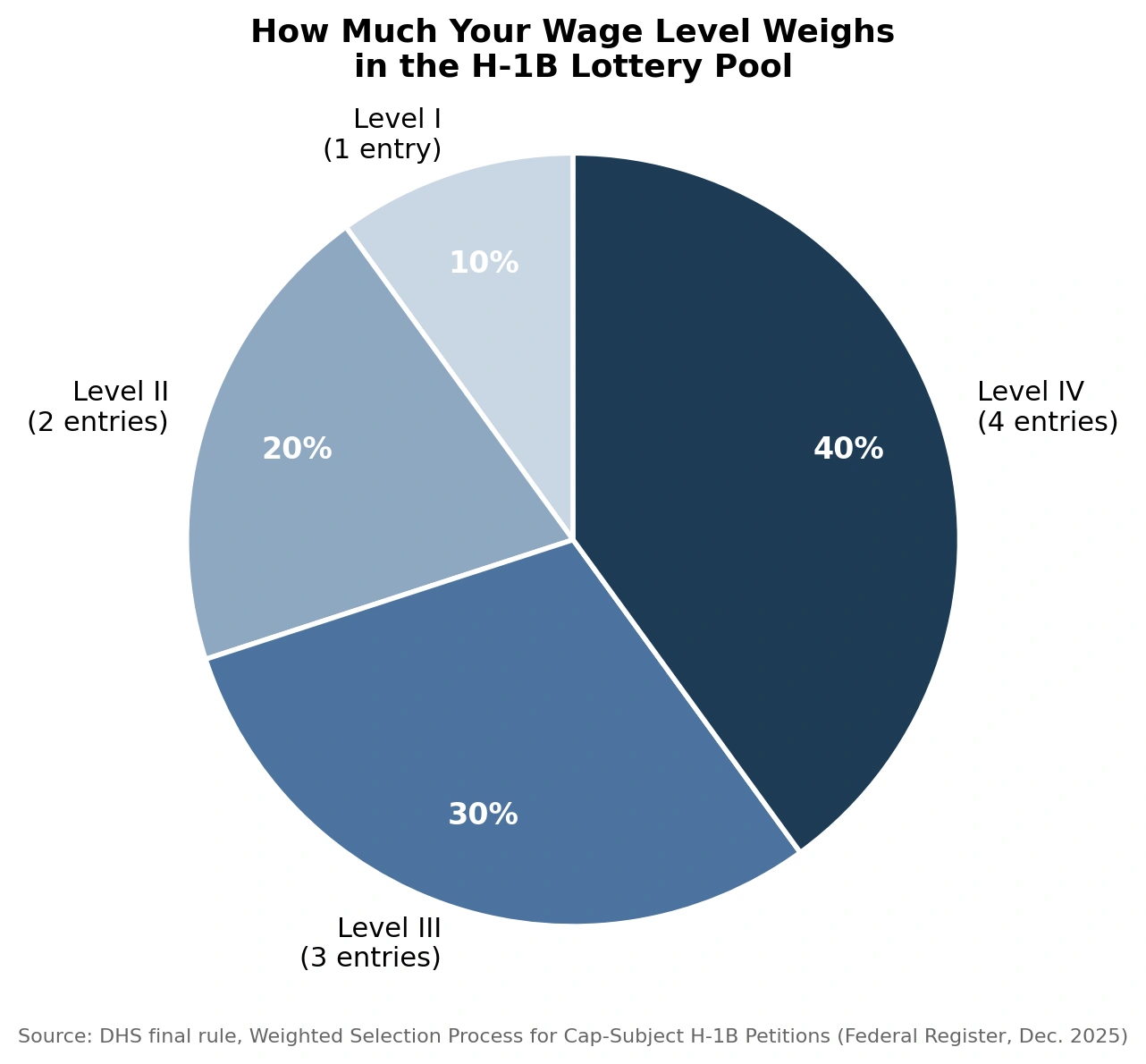
On negotiation, remember that a slightly higher wage level doesn't just mean more money. Given the current lottery rules, it can directly raise your odds of being selected at all. Pull the actual number from for your role and metro area before you ask, so you're negotiating with a real figure instead of a guess. Here's language you can adapt:
"Based on the Department of Labor prevailing wage data for this metropolitan area, raising the compensation baseline to $X aligns this role with Level II expectations. This significantly improves our H-1B selection probability without altering the core job duties."
Frame it as a shared interest, not a demand. You're both better off if the petition actually gets selected.
What Separates the Ones Who Get Offers
The pattern is simple. Fast, relevant credentials. Skills you can prove, not just claim. A network built before you need it. Clear positioning. And a real understanding of the visa math behind every offer.
None of this is complicated. It just takes starting earlier than most people do.
 The College Majors Foreign Students Regret Choosing
 The Tightest Job Market in Years for College Grads
 How Universities Are Adapting Health Programs to a Moderating Job Market
 How Flexible Are PhDs in a Changing Job Market
 Understanding the Decline of International Enrollment in American Universities