Introduction

Online degree programs are increasingly becoming the top choice for working adults around the world—especially for international students seeking flexibility, affordability, and access to respected U.S. or global universities without needing to relocate. With remote work and digital education now widely accepted, the structure of higher education has shifted to meet the needs of professionals managing jobs, families, and time zones.
For international students, an online degree offers more than just convenience. It provides a path to improve career mobility, gain specialized qualifications, and access high-quality education without visa delays or relocation costs. But choosing the right program isn’t only about reputation—it’s about matching the pace, content, and structure of a degree with your career goals, finances, and current responsibilities.
This article breaks down how to find the best online degree programs as a working adult living abroad or already in the U.S., which majors lead to strong returns, and how employers view online education today.
Why Working Adults Are Choosing Online Degrees
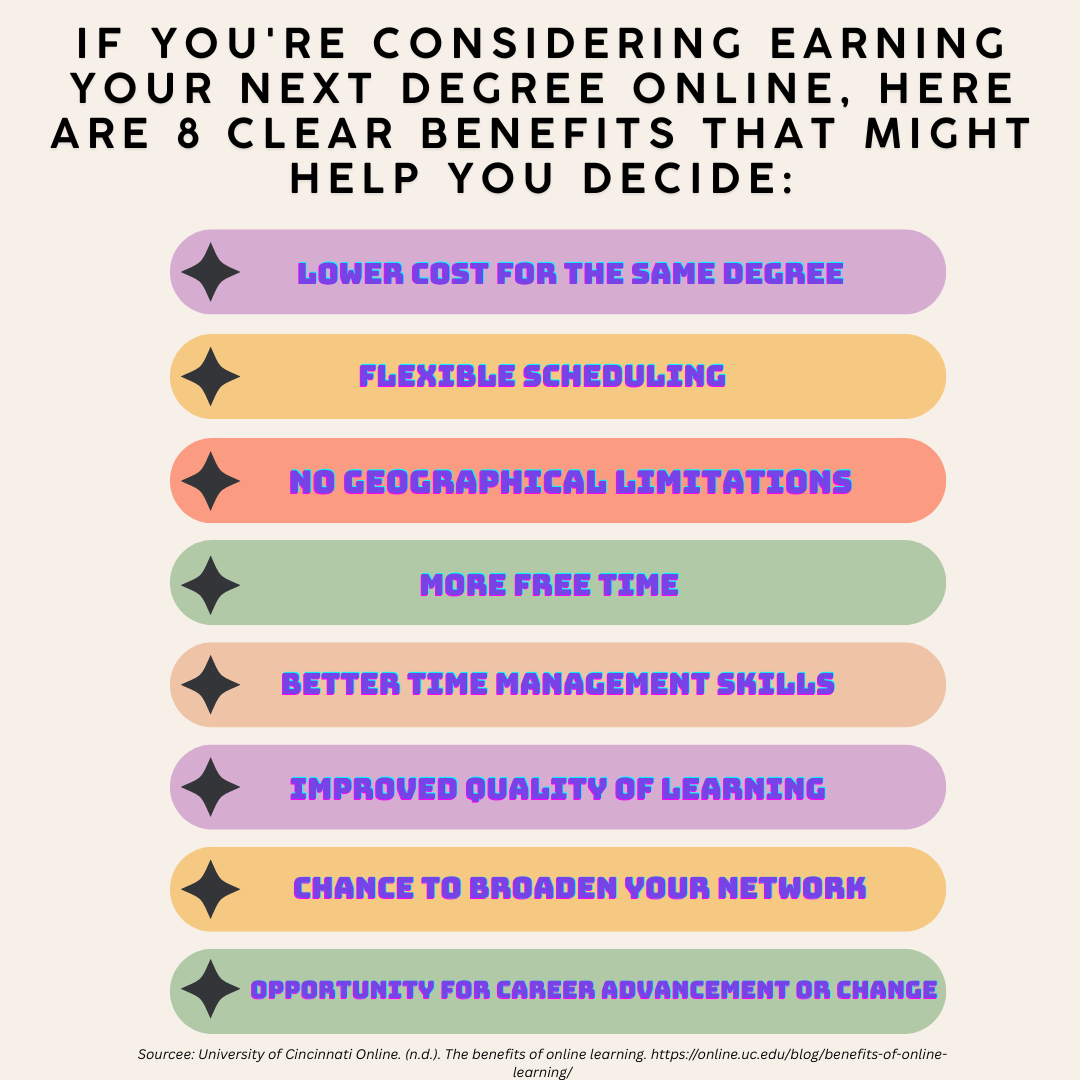
International students who work full-time often face serious constraints: limited flexibility at traditional universities, visa limitations, and time zone conflicts. Online degree programs respond directly to these challenges.
Flexibility for Full-Time Workers
Many programs are asynchronous, meaning you don’t have to log in at a specific time. This allows students in different time zones to manage coursework around their schedules—critical for adults working standard or irregular shifts.
Avoiding Relocation Costs
With an online degree, you can earn a U.S.-accredited diploma without moving abroad. This removes housing, travel, and visa hurdles while still giving you access to the same curriculum and faculty as on-campus students.
Expanding Access Across Borders
Online universities are opening their programs to learners worldwide. Schools like Arizona State University Online, University of Florida Online, and Purdue Global accept international applicants and offer global tech support, multilingual advising, and online libraries—all essential for remote learners abroad.
Realistic Path to Career Change
For working professionals looking to shift careers, online education offers a low-risk way to explore new fields. You don’t need to quit your job or move countries to gain entry-level credentials or specialized certifications that lead to new opportunities.
This flexibility makes online degrees particularly attractive to adults balancing career responsibilities with academic goals.
Degrees That Offer Strong ROI for Adults
For international students balancing work and study, the right degree isn’t just about finishing quickly—it’s about earning credentials that lead to higher salaries, stronger job security, or eligibility for advanced roles globally. These programs stand out not only for their accessibility online but also for their real-world outcomes.
High-Impact Degrees in Growing Fields
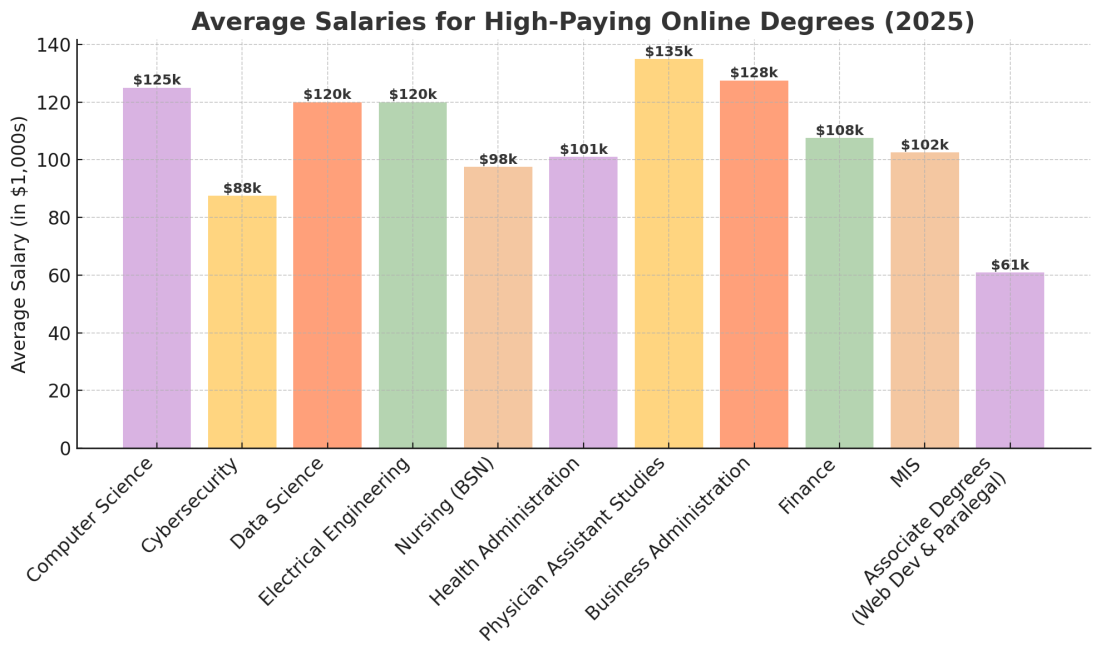
Fields like Computer Science, Cybersecurity, Data Science, and Business Administration continue to dominate in job growth and salary potential. These programs are often fully online, offered by universities that support international students, and lead to roles with high demand in nearly every country.
Computer Science: Median salaries range from $100,000 to $150,000. Common online roles include software engineering, systems analysis, and AI development.
Business Administration: Offers broad career pathways in management, marketing, and entrepreneurship. Online MBA programs are common, with salaries ranging from $85,000 to $170,000 depending on industry and region.
Quick, Affordable Entry Points
Associate degrees in fields like Web Development, Paralegal Studies, or Health Services are often fully online and can be completed in 18–24 months. These programs are useful for international students who need fast, affordable credentials to improve their job options—without the time or cost of a four-year degree.
Many of these programs qualify for work authorization post-completion in countries like the U.S. (through Optional Practical Training or CPT pathways).
In-Demand Specializations
Health-related programs like Nursing (BSN) and Health Administration, as well as MIS (Management Information Systems), are frequently offered online with hybrid clinical or project-based components. These degrees are increasingly accepted across borders, especially when earned from accredited U.S. institutions.
The key is choosing a degree that aligns with your skills, goals, and visa/work realities. An online format does not limit the job market reach—but your program choice can.
Choosing a Degree You Can Actually Finish
For working international students, completing an online degree isn’t just about ambition—it’s about endurance. A program that sounds great on paper can become overwhelming if it demands constant attendance, heavy math requirements, or rigid pacing. That’s why selecting a degree you can realistically finish matters just as much as picking one that’s prestigious or high-paying.
Fields with Manageable Coursework
Certain degrees are known for being more flexible and less technically intensive, making them ideal for adult learners:
Business Administration: Practical and often allows for credit based on prior work experience.
Liberal Arts: Broad and multidisciplinary, suitable for students still exploring their path.
Psychology: Focuses on theory and analysis rather than lab-based work.
English: Built around reading and writing, often with asynchronous discussion-based assignments.
Communications: Project-based and rooted in real-world media, marketing, or public relations.
These programs are easier to manage not because they’re academically light—but because they often avoid high-stakes testing, lab work, or time-sensitive group tasks. They give you room to pace yourself, especially if English is your second language or if you're learning alongside a job.
Online Design That Supports Completion
Look for programs that:
Offer generous transfer credit policies
Allow for breaks or reduced course loads
Use modular or self-paced learning formats
The easier the program is to navigate, the more likely you are to finish it—and the faster you can turn your new credential into a job opportunity.
Accreditation, Legitimacy, and Employer Recognition
International students often face stricter documentation and verification processes when it comes to proving their education to employers, government agencies, or graduate programs. This makes accreditation and program credibility absolutely essential when choosing an online degree.
Why Accreditation Matters
A degree from an accredited institution confirms that the program meets academic and industry standards. This matters for:
Transferring credits between schools
Qualifying for student visas, government aid, or employer reimbursement
Getting a job or promotion with global employers who verify credentials
In the U.S., check that the program is recognized by one of the six regional accreditors or the Distance Education Accrediting Commission (DEAC). Many countries also recognize U.S. regional accreditation for degree recognition.
Will My Diploma Say “Online”?
In most cases, no. Schools like the University of Florida Online, Arizona State University, and Southern New Hampshire University issue diplomas that look exactly the same as their on-campus versions. Employers see the degree title and university—not how you earned it.
If you're applying for a visa, licensing, or immigration, your transcripts may indicate the format of study. But for most jobs, especially international remote roles, the “online” format is not a disadvantage—what matters is that the degree is accredited and matches the employer’s job criteria.
Online Degrees Are Widely Accepted
Surveys by the Society for Human Resource Management (SHRM) and NACE show that a large majority of employers view online degrees from accredited schools as valid and valuable, especially in fields like business, tech, and healthcare. Your career success depends more on what you studied and where, not how.
For international students planning to work in the U.S., UK, Canada, or elsewhere, choosing a school with a strong global brand can also improve recognition across borders.
Finding the Right Fit: Format, Budget, and Support
Once you've identified your degree and confirmed the program's credibility, the final step is making sure the format and support structure actually fit your daily life and budget. For international students juggling time zones, currencies, and sometimes limited internet access, these factors make a real difference.
Program Format
Online degrees typically fall into one of three categories:
Asynchronous: Log in anytime to watch lectures and submit assignments. Best for students in different time zones or with unpredictable work schedules.
Synchronous: Requires live attendance for classes or discussions. Useful for those who want more structure and real-time interaction.
Hybrid: Combines both, or includes some in-person components (more common in health programs). Not ideal for students outside the host country.
You’ll also find self-paced programs that allow you to finish as fast or slow as needed. Schools like WGU, SNHU, and UMass Global are known for this style, which is ideal for independent learners.
Budget and Financial Aid
Tuition for online programs can vary widely. A full bachelor’s might cost $8,000–$40,000 depending on the university and length. Things to consider:
Public universities are generally cheaper than private ones
Some schools offer lower international rates for fully online students
Federal aid is limited unless you’re a U.S. citizen or permanent resident, but institutional scholarships may still be available
If you're already employed, check if your employer offers tuition reimbursement. Some global companies cover online programs at accredited institutions, even for overseas staff.
Student Support Services
The best online programs don’t leave you to figure everything out alone. Look for:
24/7 tech support
Career counseling and internship placement
Academic tutoring
Virtual libraries, writing centers, and peer discussion forums
This support network is especially helpful for international students adjusting to a new academic system. It’s not just about access to classes—it’s about access to help when you need it.
Conclusion

For working international students, online degree programs open up access to education that fits into real life—whether you’re working full-time, raising a family, or preparing to change careers. The best programs aren't just flexible; they're focused on outcomes that matter: better pay, stronger job security, and globally respected credentials.
By choosing a degree in a high-demand field, making sure the program is accredited, and matching the structure of the program to your daily responsibilities, you can finish your education without uprooting your life. Employers are increasingly open to online degrees—as long as they come from legitimate schools and reflect real skills.
The most successful students aren’t those with the most free time, but the ones who pick programs that align with their goals and pace. Online learning gives you that option. Now it’s up to you to choose the path that gets you where you want to go.